Travel to Tahiti - The Largest of the French Polynesian Islands
Our Articles about French Polynesia: Bora Bora | Travel in Tahiti | Thiti Tours | Moorea | Taha'a | Raiatea | Rangiroa | Nuku Hiva
Introduction
Somewhere at the end of the world, as far from Europe as possible, in the Southern Hemisphere, the islands of French Polynesia are hidden in the heart of the vast Pacific Ocean. Tahiti is the largest among them and is home to the capital of French Polynesia: Papeete.
These islands are scattered in five main groups across a vast area the size of Europe, including a total of 118 islands, 67 of which are inhabited. The total population is about 270,000, some of whom are pure Polynesians, while others are of mixed descent with many Chinese immigrants who arrived in several waves, and Europeans, mainly French, who settled there.
French Polynesia is a French overseas collectivity with autonomous government, and the official language is French.
The only international airport in the country is located on the island of Tahiti, making it the only entry point from other countries. The nearest country with direct flights is New Zealand (about 4.5 hours flight). Other direct flights are available from Los Angeles, Tokyo, and a few flights from Honolulu.
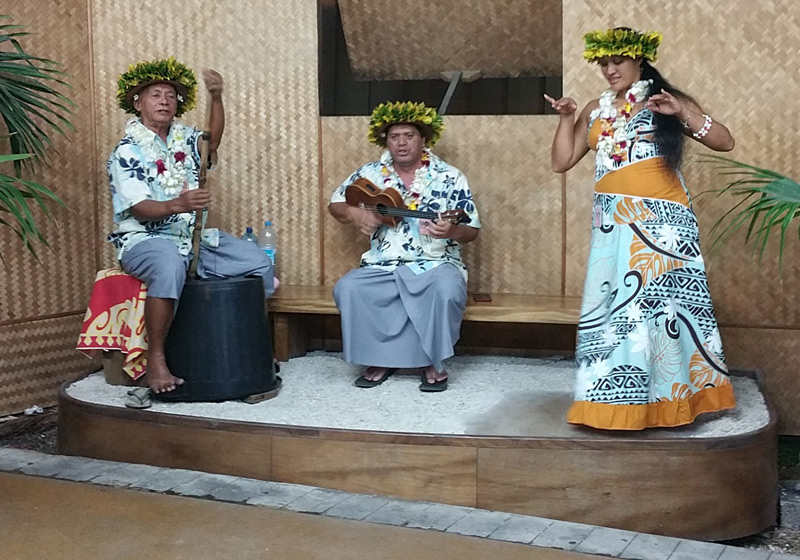
Arriving travelers at the airport are welcomed with characteristic Polynesian songs and dances:
The local currency, marked as XPF, is the French Pacific Franc. Driving here is on the right side as in France (and Israel), and Israeli citizens do not require a visa to visit this country.
French Polynesia's economy is moderately developed and based on tourism, agriculture, and budgetary support from the French government.
Tourism is well-developed, especially in the island chain called the "Society Islands," which includes Tahiti, Bora Bora, Moorea, and several other islands. High-quality and pampering hotels can be found, including many with "overwater" bungalows.
Book Tours in Tahiti from GetYourGuide.com
Powered by GetYourGuide
Tahiti
The island of Tahiti is the largest in French Polynesia and contains the islands' capital - Papeete. The only international airport of the islands is located on Tahiti. Some of the other islands have airports for domestic flights operated by Air Tahiti.
Most of the islands' residents, about seventy percent (approximately 180,000), are concentrated on Tahiti, mainly in the city of Papeete.
Many residents from various islands have migrated to Tahiti as it serves as the business, cultural, and political center, making it easier to find employment, education, and entertainment.
The geographic structure of the island is divided into two: the northwestern part is called "Big Tahiti" (Tahiti Nui) and the southeastern part is called "Small Tahiti" (Tahiti Iti).
The center of Tahiti Nui is mountainous and almost uninhabited, with most residents and hotels concentrated in Papeete and its surroundings and along the island's western coast.
A chain of coral reefs is spread along the southwestern shores, blocking waves from the open sea, so these beaches have calm waters. There are few sandy beaches convenient for swimming on the island.

There are beaches with black sand and one small beach near the Le Meridien hotel with white sand.

On some beaches, there are sea cucumbers and spiny sea creatures that should not be touched. It is generally advisable to swim with reef shoes or suitable water shoes.
This is not primarily an island for sea recreation, but rather the place to get to know the local culture, residents, and rich vegetation. Primarily, it serves as a starting point for flights or cruises to other islands full of amazing beaches. It is recommended to dedicate two days to see the best it has to offer.
A common local water sport is outrigger canoeing, and there are events and competitions around this topic.
Many festivals of music, dance, murals, and more are held in Tahiti.
The residents are warm, cordial, and welcoming.
The entire island is full of roosters and hens roaming freely everywhere, including near luxury hotels and in the center of the island.

They were brought in the past to eat centipedes, which were the only dangerous animal on the island, and since then they have multiplied undisturbed. There are no snakes or dangerous predators in French Polynesia. In short - paradise!
♦ Recommended Hotels in Tahiti:
Most hotels on Tahiti are located in the southwestern part of the island, which is characterized by less rainfall thanks to the high mountains blocking the clouds.
Recommended hotels:
Tahiti Ia Ora Beach Resort - Managed by Sofitel
A high-quality luxury hotel located on the beach with a small strip of white sand, the only one on Tahiti. The beach is pleasant for swimming but also has stones, sea cucumbers, and long, thin water creatures.
However, the hotel has an excellent large sandy pool for swimming.

The hotel has large, spacious rooms and overwater bungalows, though without direct water access. Views from rooms overlook the sea, pool, or garden. The hotel features a tennis court, beach volleyball, ping pong, and kayaks. It has two restaurants and two bars and offers various music shows, including typical Polynesian music. Located about 15 minutes drive south of the airport, near the Museum of Tahiti and its Islands, and about 20 minutes from Papeete.
InterContinental Tahiti Resort & Spa
A luxury spa hotel adjacent to the airport in Faaa, about ten minutes drive from Papeete. The hotel has a sandy swimming pool and a private artificial beach. It also offers standard rooms and overwater bungalows. The hotel features a diving center, aquarium, tennis courts, spa, and a beautiful restaurant over the water.
Tahiti Pearl Beach Resort
A large 4-star resort located within tropical gardens on a black sand beach, featuring a large infinity pool near the shore.
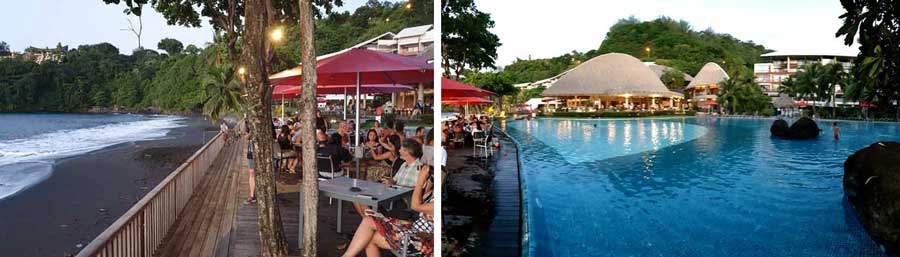
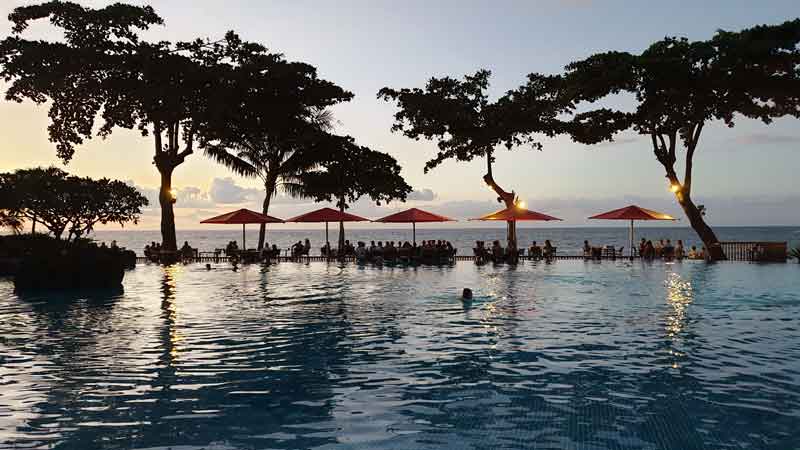
The hotel features a spa, gym, restaurant, bar, shops, and a business center. All rooms are air-conditioned, with a balcony or patio overlooking Matavai Bay and Moorea island. Some rooms feature a large jacuzzi.
The hotel offers free daily activities such as Tahitian dancing, local craft classes, yoga, and water aerobics. Located about 10-15 minutes drive northeast of central Papeete. The hotel offers a free shuttle service to the city center (6 days a week). Free internet.
Tours in Tahiti:
Book Recommended Guided Tours from Viator:
Guided Tour with Tracey - Unique Tahiti Tours
The most convenient and recommended way to travel the island and be impressed by it is through a full-day guided tour.
Unique Tahiti Tours - Authentic Island Tours by Tracey is highly recommended, and she personally guides all the tours. Tracey is English, married to a local, and has lived in Tahiti for over ten years. She manages to describe the island and its residents from a balanced Western perspective, yet she is well-connected to the locals and very friendly. Every local she meets during the tour, she stops to greet and have a cordial conversation in a mix of French and Tahitian.
She offers various tours on Tahiti: a walking tour of the capital Papeete, a half-day tour of the east coast, and the most recommended of all: a full-day tour of the west coast including Tahiti Nui and Tahiti Iti, reaching places off the beaten track. Throughout the tour, you will see very few tourists and many locals.
The tour begins with a hotel pickup in a spacious, air-conditioned van. From the hotel, you drive southwest through a small town to see the town hall and post office, painted in bright colors, and of course, the ancient Catholic church.
♦ Book a Private Tour in Tahiti with Unique Tahiti Tours via Viator:
West Coast Tahiti Tour: Unique Tahiti Tour - personalised, small group west coast tour
or
East Coast Tahiti Tour: Unique Tahiti Tour - personalised, small group east coast tour

Most island residents are Christians and very devout. Along the road, you occasionally pass stalls offering fruits and vegetables, and some even offer large fish caught that day, hanging on hooks in the open air. Be sure to stop and buy delicious bananas, mangoes, and papayas.

While traveling and meeting locals, you will learn a lot from the guide about their lifestyle. The youth here are quite permissive regarding relationships, and if a girl becomes pregnant, she doesn't abort; the family raises the baby. There is almost no crime, only soft drugs like marijuana and a tendency toward alcohol. Overall, it's a very safe island and the residents are cordial.
During the tour, you will also learn basic Tahitian words:
"Mauruuru" - Thank you
"Nana" - Goodbye
"Maeva" - Welcome
"Ia ora na" - Hello, good day
After a few minutes' drive south, you stop at a river mouth where the guide throws pieces of bread into the water, and immediately many large eels appear to snatch the bread. Tahiti is surrounded by a coral reef that blocks waves, but in places where rivers flow into the sea, corals did not develop, creating openings in the reef.
Further on, you stop to visit a sacred site called Marae of Arahuruhu, which includes an ancient Polynesian temple with Tiki statues, all against a dramatic backdrop of green cliffs.

This is an open area surrounded by a low wall, built entirely from basalt stones found throughout the island. Today's residents are Christian but many still believe in the ancient Polynesian gods as well. The place is surrounded by rich tropical vegetation, and almost the entire island is lush with trees, flowers, and tropical fruits.

Everywhere you see mango, coconut, papaya trees, and the "Breadfruit" tree with grapefruit-sized spiky fruits. It can only be eaten after cooking and is their national staple, serving as a substitute for bread or rice.

There are also many Annona trees; it's a fruit with various medical properties and also repels mosquitoes. The island has many Hibiscus flowers, their national flower, and flowers from the ginger family, various types of Heliconia, water lilies, and their fragrant Tahitian Gardenia (Tiare Tahiti), from which they make the leis used to welcome tourists and for celebrations.

Polynesians also use flowers to indicate their status: a married woman wears a flower on her left ear (close to the heart), a single woman on her right ear (the same for men, but they usually wear a closed bud).

The guide explains the flora and fauna and their various uses, such as making dance skirts and leis from leaves, building thatched roofs, hats, mats, baskets, and more.
She also explains the flag of French Polynesia:
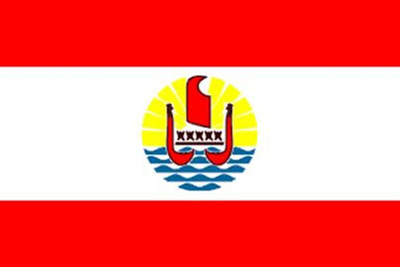
The flag consists of two red horizontal stripes and a white stripe in the middle, the national colors. In the center of the white part is a circle with sea waves at the bottom and gold rays representing the sun. On the waves is a canoe (rowing is their national sport) with five rowers represented as stars, representing the five island chains of French Polynesia.
In the center of the island are high, forested mountains usually covered by clouds. The tour passes along the coasts, which are mostly calm but not particularly inviting for swimming because it is geologically a young island, so there are no white sandy beaches except for one; there are a few black basalt sand beaches, and most are stones, shell fragments, and corals.
A recommended attraction on the tour is a walk in the Vaipahi Botanical Garden and waterfall. In addition to the rich vegetation, you meet local school students aged 14-15 who join the tour and ask tourists various questions (and vice-versa) to expose them to our lives and practice their English, which is quite weak.

Almost none of the students had heard of Israel or knew where it is! Quite surprising for a devoutly Christian people who have learned much about Jesus...
(The guide participates in a special project with the school and tries to integrate it into her tours. If interested, this should be coordinated in advance).

For lunch, you stop at an authentic seafood restaurant on the shore with a beautiful view called Beach of Maui.

Dishes include various fish and seafood with cooked local vegetables. One of their national dishes is completely raw fish! The food is delicious but expensive, as in all restaurants and hotels across the islands.

The island is full of natural water springs. In some places, the spring creates a stream with clear water, serving as a pastoral recreation area for locals. In many other places, residents have connected pipes to the spring wall from which water flows freely, and they fill bottles and containers. Free mineral water from nature! (I drank a whole bottle, but unfortunately, I suffered from stomach issues the next day! I don't know if it was from the water or something else, but I recommend drinking only from sealed bottles).

Continuing the drive to the small island Tahiti Iti, passing through local villages where clans live in adjacent houses on land they also cultivate.
While driving through the pastoral landscape, you ascend to a beautiful viewpoint over Big Tahiti (Tahiti Nui) and the strip connecting the two.
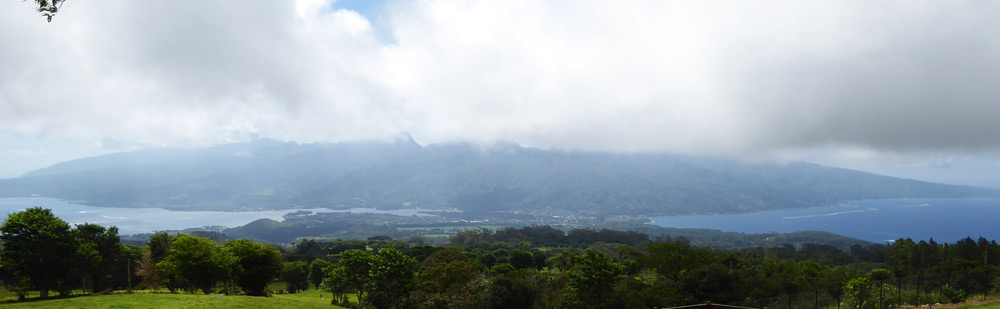
Later in the tour, you stop at a factory for their famous fragrant Monoi Oil. It's a small private factory with several vats full of oil mixed with various flowers to give it its aroma. They produce various cosmetics and especially fragrant massage oil.

The tour includes a stop at a black sand beach suitable for swimming, located near a river mouth. There is a surf school on the beach. This is one of the few places in Tahiti with waves near the shore because the island is mostly surrounded by reefs that block them.

Another stop is at the Caves of Maraa.

A large, mostly dark cave surrounded by ferns with a water pool inside, with many water drops dripping from the ceiling. It is said that painter Paul Gauguin, who lived in Tahiti for two years at the end of the 19th century and painted some of his beautiful works here, used to swim in the cave with local girls.

On the way, you pass the Gauguin museum and gardens which have been closed for two years for renovations (typical of the local pace, known for being slow and peaceful. Nothing is urgent...).
The tour can include a visit to The Museum of Tahiti and her Islands, a small and modest anthropological museum located near the Le Meridien hotel, though it's not strictly necessary. If interested, you can visit it independently on another day (only if there is free time or if it rains).

Jeep Tour to East and Central Tahiti with TAHITI DISCOVERY
The eastern and central parts of the island, where the highest mountains and abundance of waterfalls and lakes are, are much more pristine and less inhabited than the western part, and mostly accessible only by off-road vehicles. This area is mostly inhabited by indigenous Polynesians trying to maintain their original lifestyle. It is highly recommended to join a full-day jeep tour with a charming, knowledgeable, and inspiring Polynesian guide named "Teiva." He lives in a small village in the heart of the high green mountains and will show you the best landscapes, hidden gems, flora, and fauna, while playing the Ukulele "on the way" - the most popular instrument in French Polynesia.
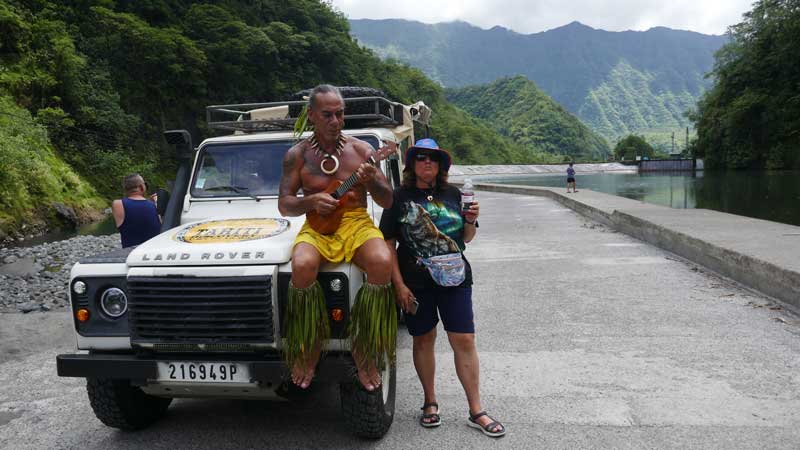
Tour Name: Full-day Papenoo Valley tour to Lake Vaihiria
Duration: 8-9 hours. This is a tour to the "heart" of green and wild Tahiti.
After hotel pickup in Papeete in a colorful open-top jeep, you drive to the largest valley on the island: Papenoo Valley.
You drive between towering mountains, partially covered in clouds and abundant with waterfalls and dense tropical rainforest vegetation, featuring various wildflowers and fruit trees.
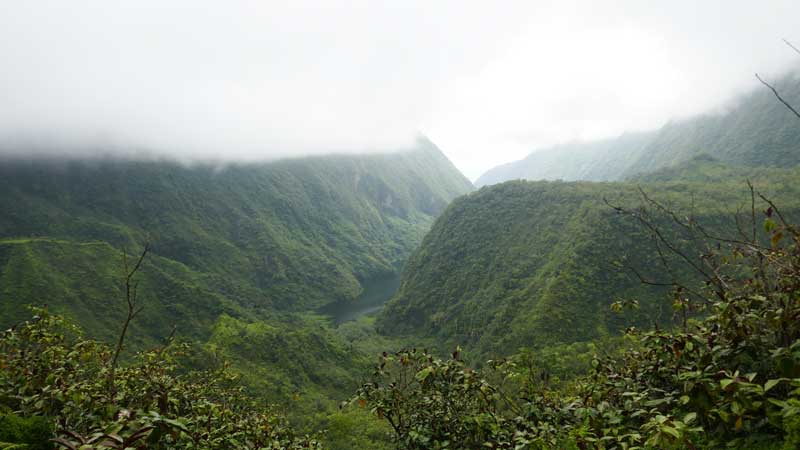
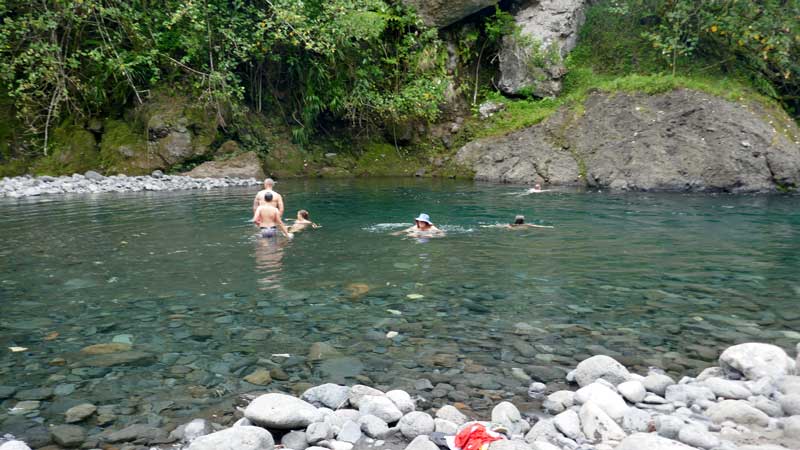
The valley also has lakes with clear water, some accessible and convenient for a refreshing swim, as well as several dams. The first stop is to feed eels at one of the many river mouths. The guide throws sardines into the clear water and giant eels quickly arrive to feast. Roosters and dogs also come to try and eat the scraps.
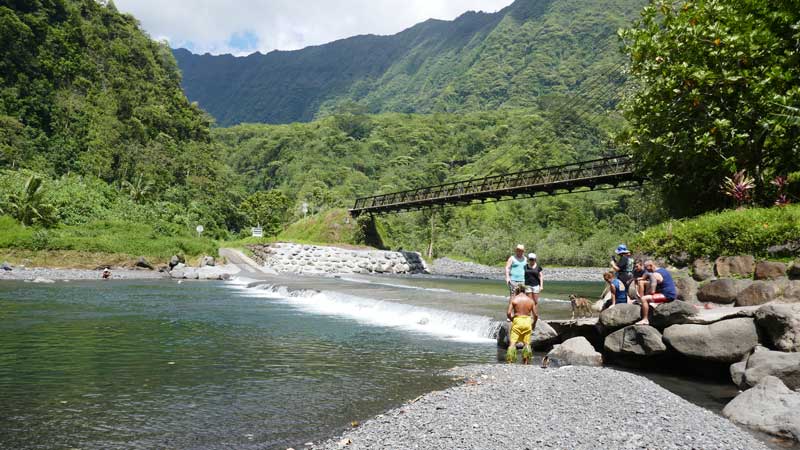
The drive continues through the impressive valley with stops for views of waterfalls, bridges, and to admire the vegetation and flowers. For example: Hibiscus flowers in three colors: red, orange, and yellow, and the Red torch ginger flower.
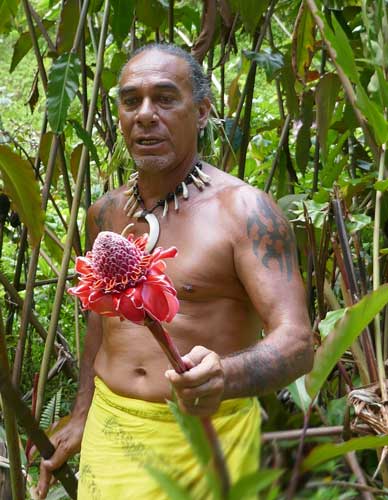
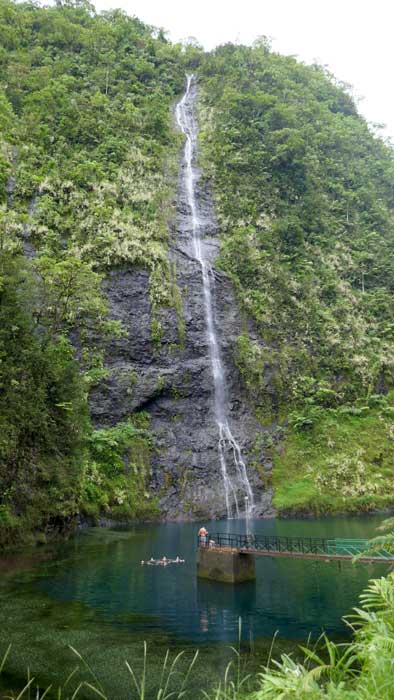
During stops, Teiva provides fascinating explanations while playing and singing. Later, you stop for a swim in the river alongside welcoming locals.
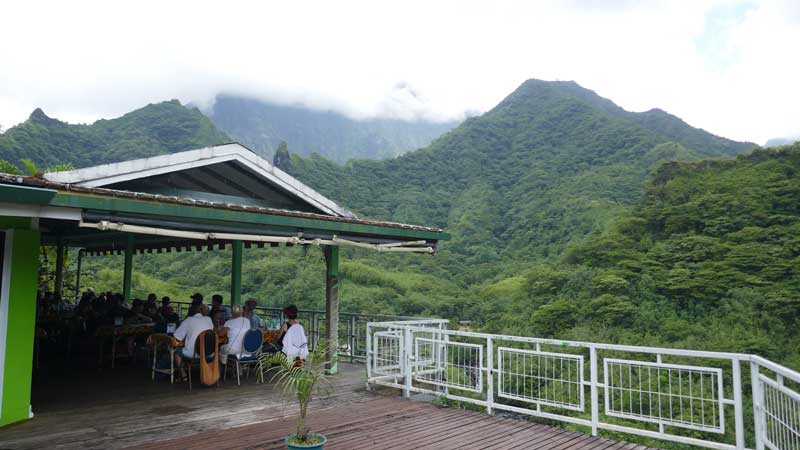
The drive continues into the heart of the island on winding dirt roads to a viewpoint of the largest volcanic crater on the island. From there, you proceed to the only hotel in the island's center, which also has the only restaurant in the area serving typical Polynesian and Western food (food not included). The hotel-restaurant is located between towering mountains and the view is breathtaking! The restaurant's name is Maroto.
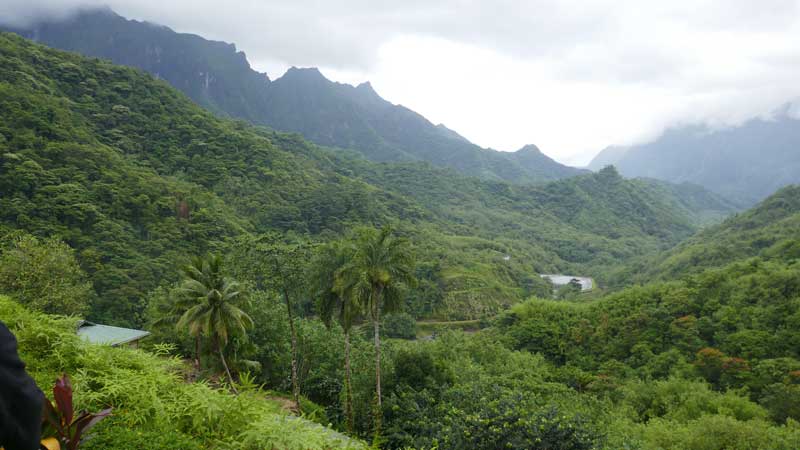
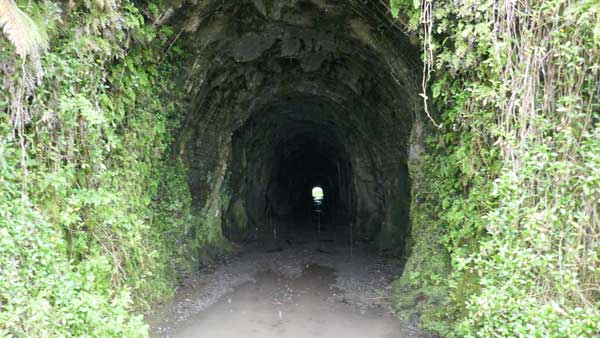
After the meal, you continue driving through dramatic mountains and intensifying landscapes to a tunnel carved into the mountain.
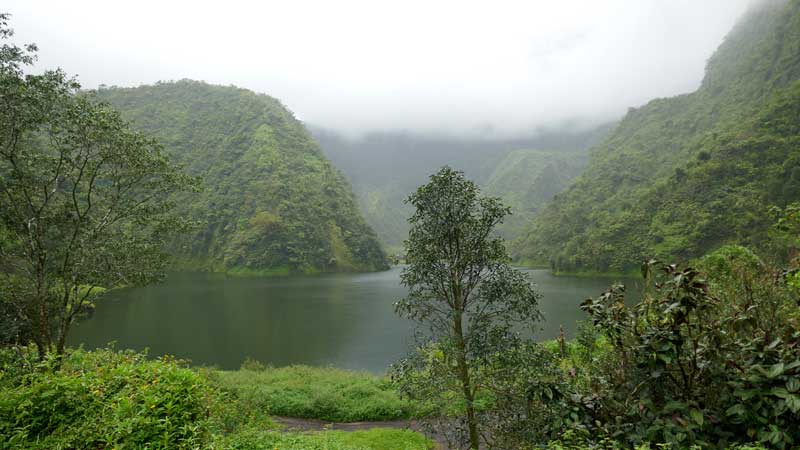
On the way, you stop at additional viewpoints including Lake Vaihiria and the Tahinu dam.
Weather changes quickly in the different areas you pass through. In the valley, the sun was hot, while later, as expected in a rainforest, there were sudden heavy downpours that stopped just as magically. The experienced guide opens and closes the jeep roof according to the weather, allowing you to stand during the drive when possible to admire the nature and surroundings.
The way back to Papeete follows different off-road paths than the way in, essentially completing a circular route in the most authentic and non-touristy part of Tahiti.
A similar tour to East and Central Tahiti can be purchased on the reliable Viator website:
Crossing Over Tahiti Island Safari 4x4
Those with limited time (for example, cruise ship passengers) can join a half-day tour only from Papenoo Valley to the volcanic crater in the center of the island.
Video about the Jeep Tour in the Heart of Tahiti:
Segway Tour in Papeete
It is worth dedicating at least half a day to visit the capital of Tahiti - Papeete, which is the commercial, cultural, and political heart of the country, full of markets, shops, government buildings, and event halls.
The most convenient and fun way to get an impression of the vibrant and diverse city (where you mostly meet locals rather than tourists) is on a Segway tour with Discover Papeete by Segway.
The company offers tours from one to two and a half hours. It is recommended to join the longest tour.
On the two-and-a-half-hour tour starting from the city's visitor center, you visit an indoor market featuring fruits, vegetables, flowers, hats, and more.

Prices here are reasonable relative to expensive Tahiti (it is recommended to return to the market after the tour to wander and shop independently).

You pass along the main street by a variety of shops, such as black pearls which are a famous product of French Polynesia, souvenir shops, and clothing. You reach government buildings whose courtyard hosts a special market (only active for 15 days once a year) where residents from across French Polynesia display their typical goods, especially very beautiful and expensive items made from high-quality straw such as hats, bags, mats, and more.

Next to the parliament building is a very beautiful garden of flowers and plants. While we toured it, gardeners were working, and among them was the head of parliament who found time to give them instructions. At the edge of the gardens is a natural spring with fish, and nearby was the ancient queen's house, so Polynesians believed the water there was sacred.

You visit the city's large church, where the statue of Mary holding Jesus shows both with Polynesian features and holding breadfruit.

The tour passes the police building and the President's House built in a French style reminiscent of the French Quarter in New Orleans.

Later, you pass beautiful murals; once a year there is a festival where they paint on the walls.


The next destination is the promenade along the sea, the marina, and opposite them the city's commercial port.

Cruise ships also arrive at the city bringing tourists to the island. Later you see many outrigger canoes on the shore and some in the water.

On the way back, you pass a large stadium used for both sports events and various festivals, two theaters, and plenty of tropical vegetation (yes, even in the heart of the city).
The people you pass are polite, friendly, and greeting; cars stop when you want to cross. The guide tells many stories during the tour about the local residents, flora and fauna, and the history of the islanders who arrived here from Southeast Asia about a thousand years ago and dispersed across the islands of the Pacific. He also tells of the Europeans who arrived and the missionaries who converted all residents to Christianity and erased their previous cultural markers, and only about a hundred years ago did they begin to reconstruct part of their previous language and culture.
The tour ends with a visit to a shop that is also an interesting and recommended small museum of black pearls by Robert Wan, who is of Chinese descent and greatly developed the cultivation of pearls from oysters in French Polynesia. The place features impressive displays of pearls and very expensive and unique jewelry.


Famous people such as Queen Elizabeth, Hillary Clinton, and Michelle Obama have visited this museum/shop.

After getting enlightened and impressed by Tahiti, its culture, and residents, it's time to pamper yourself - fly (or sail) to one or more of the famous resort islands with their turquoise lagoons: